
Practice
Where Real Skill Development Happens
Virtual Sapiens gives learners a fully configured, consequence-free practice environment where they can rehearse high-stakes conversations and presentations, receive nuanced behavioral feedback across verbal, vocal, and nonverbal dimensions, and repeat until skills actually change.
✓ Enterprise-grade security & compliance SOC 2 Type II · GDPR · EU AI Act
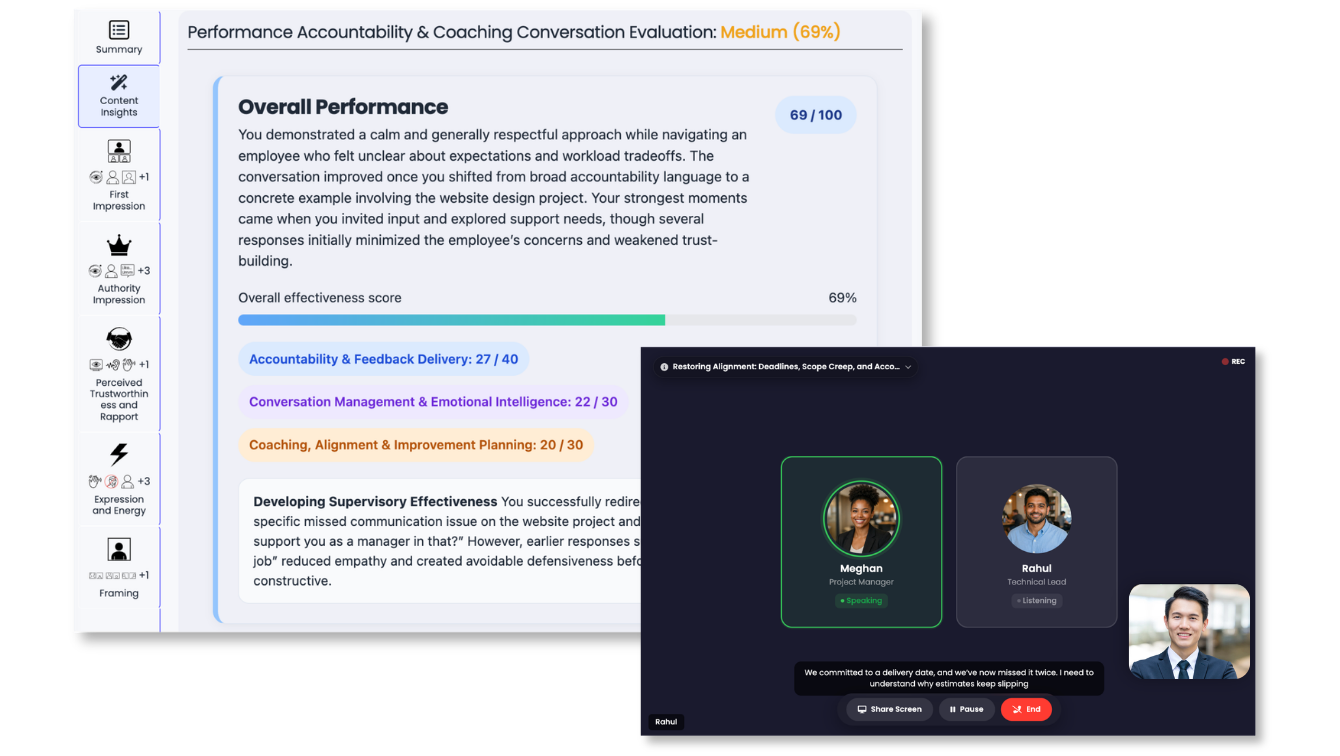
A coaching-conversation roleplay scored on content and delivery, with the behavioral breakdown alongside it.
AI Roleplay
Fully customizable scenarios built to partner methodology and competency models. Covers leadership conversations, difficult conversations training, feedback delivery, executive presence, and presentation skills training.
Practice modes
1:1
One learner, one AI persona, repeated as often as it takes. The core practice mode for coaching conversations, feedback delivery, and executive presence.
Multi-persona
One learner, multiple AI personas in the same scenario. Built for conversations that involve more than one stakeholder at once — negotiations, cross-functional conflicts, or a difficult conversation with several parties at the table.
Group
Multiple people in the same session — learners practicing together, or a learner paired with their coach or facilitator — alongside one or more AI personas. The coach can join as a participant or an observer, and either can pause the scenario to give or receive feedback, then resume right where it left off.
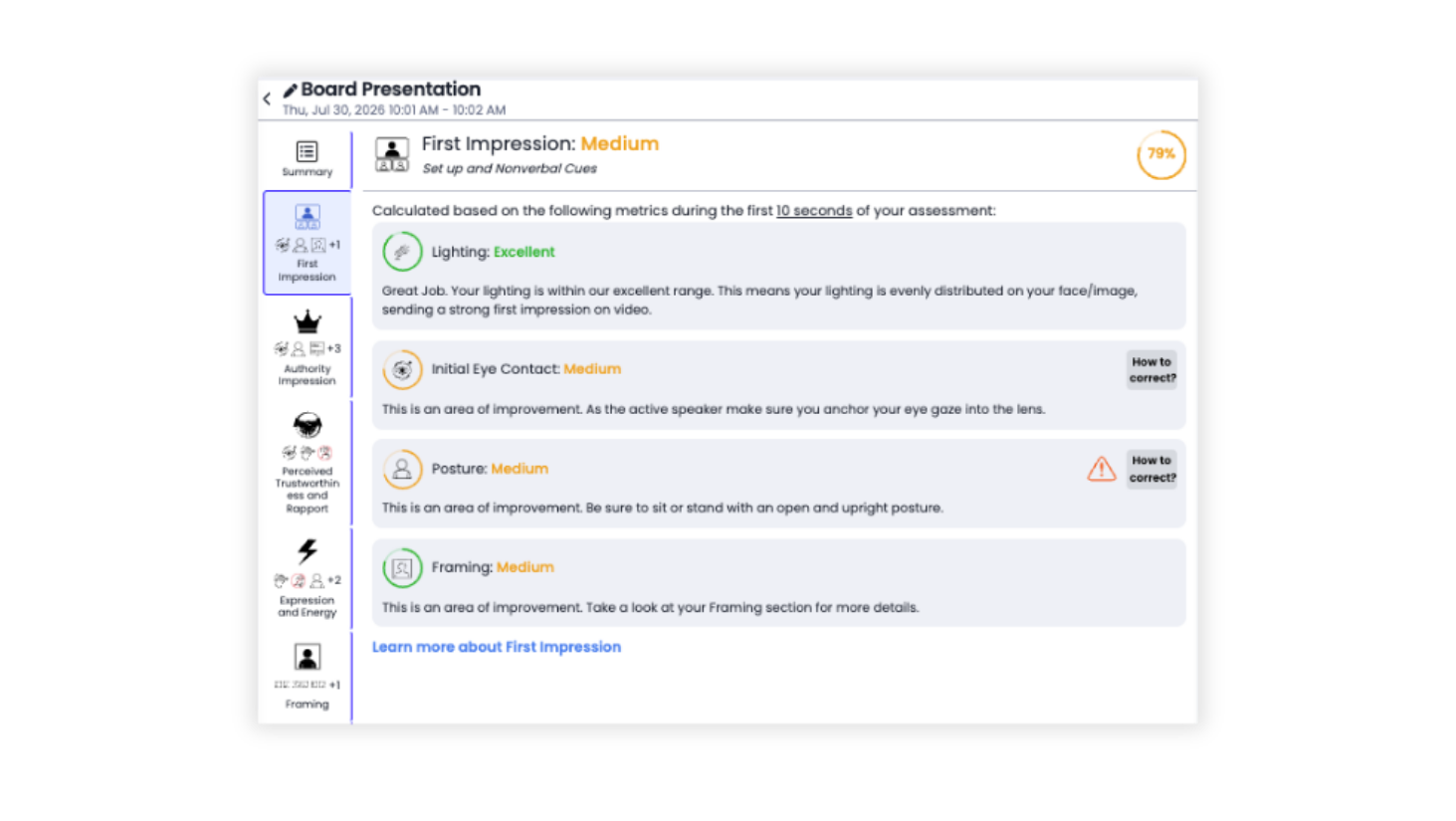
Video analysis of a rehearsed board presentation, broken down cue by cue.
More Ways to Practice
Practice mirror
Structured rehearsal for presentations and pitches with immediate feedback on clarity, confidence, delivery, and nonverbal communication.
Video Q&A
Baseline and final measurement tool. Generates the before-and-after data that feeds cohort-level reporting.
Video upload and analysis
Upload pre-recorded sessions or meeting recordings and get the same depth of AI-driven feedback as live practice.
In-call analytics
Real-time insights during live video calls, with post-call summaries and a full behavioral breakdown.
Why It Works for Your Programs
Feedback on Content and Delivery
Every session is evaluated on two levels: what learners actually said, scored against your scenario’s own criteria, and how they delivered it, across verbal, vocal, and nonverbal dimensions.
Nuanced Feedback, Built on Your Methodology
Start from proven templates or go fully custom. Feedback is calibrated to your frameworks, your competency models, and your standards, with depth that generic rubrics can’t match.
More Than Rehearsal
Learners practice conversations, rehearse presentations, and demonstrate what they’ve learned, all in one environment for building skills and checking understanding.
Practice at Scale
On demand, from any device, no facilitator required. Structured practice for ten clients or ten thousand employees.
Frequently Asked Questions
Any conversation your programs train for. Partners build fully customized scenarios aligned to their own methodology and competency models, covering everything from difficult conversations and feedback delivery to explaining technical detail to non-technical audiences and facilitating meetings. Scenarios can be single or multi-stakeholder, video-based or text-based, and learners can generate their own dynamic roleplays within the frameworks you set. With VS Rooms, humans can join the roleplay too, participating directly alongside the AI or observing as a coach who can pause the session and give feedback in the moment.
AI Roleplay is conversational. Learners practice two-way exchanges with AI personas, responding and adapting in real time. Practice Mirror is rehearsal. It gives learners a structured environment to run through presentations, pitches, and other prepared spoken communication, with feedback on clarity, confidence, delivery, and nonverbal communication. Both deliver behavioral feedback across verbal, vocal, and nonverbal dimensions. The difference is whether the learner is navigating a conversation or refining a delivery.
Video Q&A can capture communication performance at the start and close of a program. Learners complete a baseline recording before training begins and a final recording at the end of the cycle. The side-by-side comparison shows exactly what improved and across which dimensions, verbal, vocal, and nonverbal. That data rolls up to the cohort level and can act as the foundation of the behavior change reports you generate for stakeholders.
Yes. Learners can upload pre-recorded presentations, meeting recordings, or practice sessions and receive the same depth of behavioral feedback available in live practice. This extends practice beyond the platform to the real conversations and presentations happening in learners' day-to-day work.
Yes. Every practice session generates behavioral data at the individual level, and that data rolls up to cohort-level reporting: practice volume, skill progression, and improvement across verbal, vocal, and nonverbal dimensions. Partners using Video Q&A as their baseline and final measurement can also anchor reports with before-and-after skill comparisons. Reports are available on demand, ready to share with the stakeholders who need them.