AI Roleplay: Boosting ROI of Instructor-Led Programs in 2026

Why Training Is at an Inflection Point

Instructor-led communication and leadership programs are at an inflection point. Demand for strong communication, leadership presence, and presentation skills is rising across roles and industries. 

The rise of AI in the workplace positions these “soft skills” as a critical differentiator for effectiveness in all roles across the workforce. At the same time, organizations face increasing pressure to adopt AI in ways that meaningfully reduce cost, improve outcomes, and scale impact.

In-person communication training remains familiar and valuable, but it is also increasingly difficult to scale. For coaches, trainers, and L&D leaders, the central question in 2026 is no longer whether to use AI, but where real ROI actually comes from. The answer is not more content or more events. It’s practice.

What ROI Really Means in Coaching and Training Programs

Historically, training ROI was measured through attendance, satisfaction surveys, or workshop completion rates. Those metrics no longer hold up.

Today, organizations care about outcomes such as:

  • Faster skill development
  • Sustained behavior change
  • Maximizing the quality of coach, manager, and trainer time
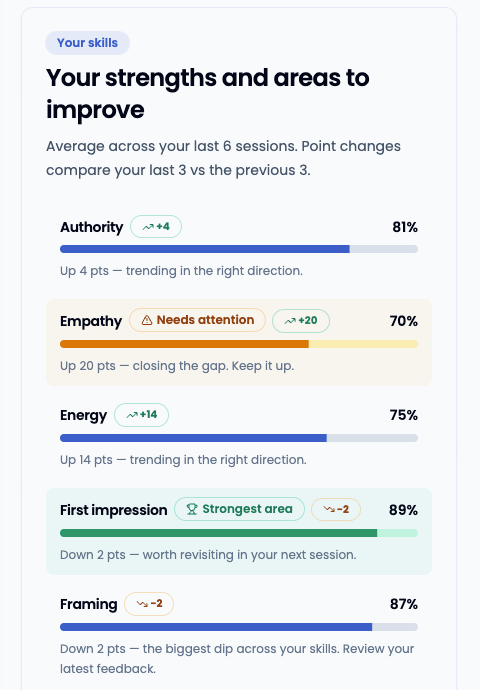
  • Measurable improvement over time 

Communication sits at the center of leadership effectiveness, yet it’s one of the hardest skills to build and measure. Real ROI comes from systems that help people practice consistently, receive feedback, and improve over time, not from one-off learning moments.

Virtual Sapiens - AI Roleplay: Boosting ROI of Instructor-Led Programs in 2026

The Traditional Model: In-Person Communication Training

Instructor-led programs typically rely on workshops, facilitated roleplay, live coaching, and group training formats. These experiences still add value through human connection, shared language and alignment, and peer-to-peer learning.

However, there are structural limitations that directly impact ROI. In-person training is often a one-time exposure with limited follow-through. Scheduling and coordination make it difficult for participants to practice regularly, especially with peers. Practice quality depends heavily on participant comfort, acting ability, and willingness to roleplay. Feedback quality varies based on facilitator skill or peer expertise, and the burden of improvement falls largely on the participant once the session ends.

The AI Roleplay Training Model: Supporting Instructor-Led Programs

AI roleplay training changes the equation by supporting and extending instructor-led programs rather than replacing them. It provides on-demand, repeatable practice aligned to real communication scenarios. Participants can complete short 10-minute roleplays, log their sessions, and bring insights back into workshops or coaching conversations.

The efficiency gains are immediate. Removing one human from a two-person roleplay reduces the labor cost of the activity by half. Minute-for-minute, AI roleplay training delivers more feedback in less time, accelerating learning without increasing facilitator workload.

Trainees experience consistent scenario quality through AI-driven personas and are no longer dependent on teammates’ availability or skill level, while trainers gain an AI coaching platform that supports both their delivery process and their learners’ long-term skill retention.

Quality of Practice: Where Training Succeeds or Fails

Practice quality determines whether training succeeds or fails. Poorly executed roleplay can be counterproductive. Common risks in traditional roleplay include unrealistic scenarios, uneven difficulty, and feedback from people without a clear definition of what success looks like.

AI roleplay training addresses these challenges by offering consistent persona behavior, adjustable scenario complexity, exposure to diverse communication styles, and standardized performance expectations. With Virtual Sapiens’ AI Roleplay, practice becomes more realistic, repeatable, and aligned to real-world leadership scenarios. When practice is structured and repeatable, learners build confidence faster and transfer skills more reliably into real-world situations.

What’s Been Missing in Communication Training: Non-Verbal Skills

Communication effectiveness goes far beyond words. Leadership presence is shaped by a range of non-verbal behaviors that are rarely addressed consistently, including:

  • Posture and physical presence
  • Eye contact
  • On-camera engagement
  • Signals of confidence or disengagement

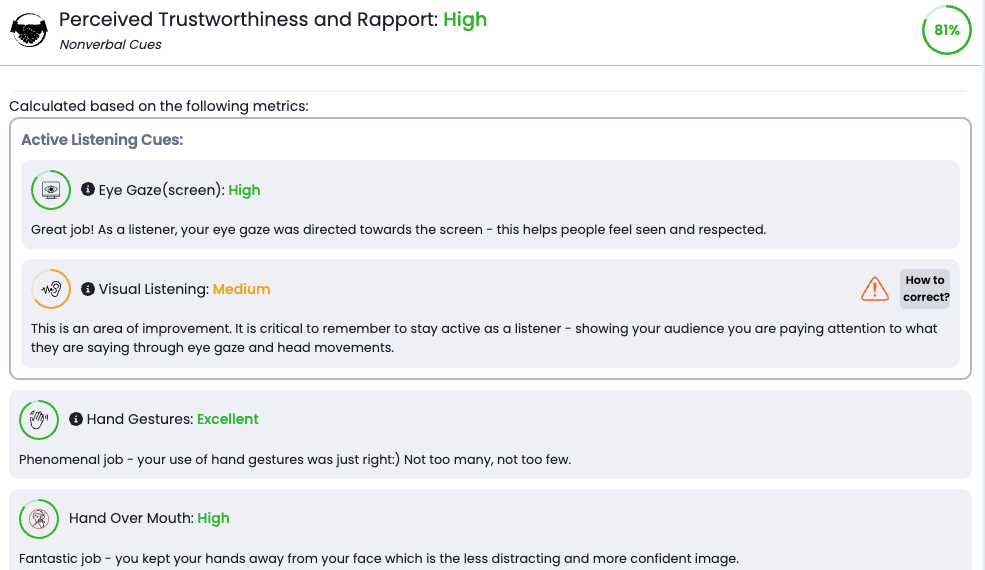
Coaches, trainers, and managers often lack the time to identify and correct these blind spots at scale. An AI communication coach can pinpoint these non-verbal signals, giving learners a private space to practice and improve repeatedly. This is how AI Roleplay enables learners to refine non-verbal behaviors consistently, without the pressure of live evaluation. This closes one of the most persistent gaps in communication training.

Coach, Trainer, and Manager Enablement: The Hidden ROI Multiplier

Coaches, trainers, and managers are the most constrained resources in development programs. In-person training often increases their workload through recording reviews, repetitive feedback, and logistical overhead.

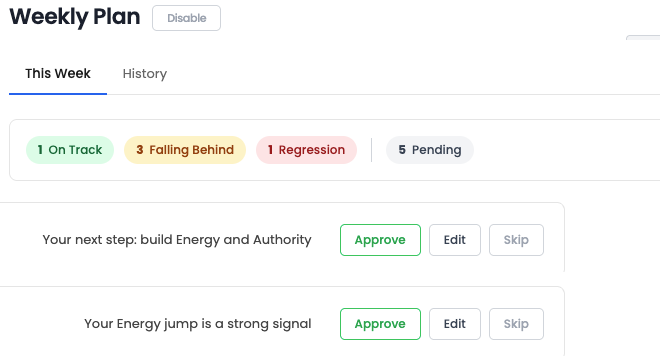
AI coaching platforms support enablement by handling repetition and baseline feedback, surfacing where human insight is most needed, and reducing time spent reviewing recordings. When coaches and trainers are better enabled, ROI multiplies across programs and human expertise is applied where it has the greatest impact. 

Virtual Sapiens enables coaching at scale, reducing repetitive workload while increasing strategic coaching impact. Scaling in-person communication training is difficult with distributed teams, multiple roles, and growing participant volumes. Consistency becomes nearly impossible.

AI roleplay training provides a consistent practice layer with the same scenarios, standards, and feedback across the organization. Over time, consistency matters more than perfection, enabling sustained improvement and reliable ROI.

Conclusion: ROI Comes From Practice, Not One-Off Events

Communication skills improve through repetition, feedback, and confidence, not through isolated training moments. In 2026, ROI favors systems that scale practice rather than isolated training moments.

AI roleplay training provides that system. When implemented intentionally, it transforms instructor-led programs from one-time experiences into engines that improve leadership communication over time. Virtual Sapiens enables better communication outcomes with less time, lower cost, and measurable impact, turning practice into performance at scale. Organizations can get started for free and experience how AI-supported practice fuels sustained behavior change.

Frequently Asked Questions

What is AI roleplay training?

AI roleplay training uses artificial intelligence to simulate realistic leadership and communication scenarios so learners can practice on demand. It provides repeatable practice, consistent scenarios, and structured feedback that traditional roleplay and workshops can’t scale.

How does AI roleplay training improve ROI in instructor-led programs?

AI roleplay training improves ROI by enabling faster skill development, sustained behavior change, better use of coach and trainer time, and measurable improvement over time. It extends learning beyond workshops and turns training into ongoing practice.

Does AI roleplay replace instructors, coaches, or trainers?

No. AI roleplay supports instructor-led training rather than replacing it. It handles practice, repetition, and baseline feedback so coaches, trainers, and managers can focus on insight, judgment, and high-impact coaching conversations.

Why is practice critical for communication and leadership skills?

Communication and leadership skills improve through repetition and feedback, not one-time events. AI roleplay training makes consistent practice possible, which is essential for lasting behavior change and real performance improvement.

How is AI roleplay different from traditional roleplay exercises?

Traditional roleplay depends on peer availability, comfort level, and facilitator skill. AI roleplay training provides consistent scenarios, adjustable difficulty, standardized expectations, and immediate feedback—making practice more effective and reliable.

Can AI roleplay help with non-verbal communication skills?

Yes. AI roleplay can coach non-verbal behaviors such as posture, eye contact, on-camera engagement, and signals of confidence or disengagement—areas that are often overlooked or inconsistently addressed in traditional training.

How does AI roleplay support coaches, trainers, and managers?

AI coaching platforms reduce repetitive work by handling practice analysis and baseline feedback. This allows coaches, trainers, and managers to spend more time on strategic guidance, multiplying their impact across programs.

Is AI roleplay training effective for large or distributed teams?

Yes. AI roleplay training provides a consistent practice layer across roles, teams, and locations. Everyone practices against the same scenarios, standards, and feedback, which is essential for scalable and consistent communication training.

How do organizations get started with AI roleplay training?

Most organizations start by integrating AI roleplay before and after instructor-led workshops or coaching sessions. This approach reinforces learning, increases accountability, and enables measurable improvement over time.

Share: