
The More You Practice, The More Your Presence Improves

The data is in. With all of our customers, we track usage-to-improvement rates very closely. After all, our whole purpose is to ensure our users are getting better over time; that the more they use our solution, the more their presence improves. With one of our university partners, we recently conducted an impact report. With over 600 users going through their assessments over the course of one semester, the results were indicative of a few amazing things: ✅ We had a 100% participation rate. For anyone in the world of B2B software sales…you know this is an incredible feat. ✅ Of the total users, 90% of users took more than one assessment with 78% taking the fully allotted 3 assessments. ✅ Looking at trends in improvement, in every single category, those who took 3 assessments saw the greatest improvement. Let’s pause and let these incredible numbers sink in…..🕜 🕔 🕢 For most of AI’s relatively short history, the question of its effectiveness has always been called into question. Within the context of coaching, will humans actually listen to AI’s suggestions? Our data conclusively shows that not only will humans listen to the AI’s feedback, but they will also update their behaviors, building new habits around the way they show up and represent themselves as professionals on video. In our opinion, this is a pretty significant result for our software. At Virtual Sapiens, we work really hard to ensure our AI is as human and warm in its feedback as possible. We also want to provide relevant and actionable suggestions. These results fall in line with our other client case studies, and we are thrilled to share these numbers with you. If you or a team is interested in leveling up your video presence, please reach out!
AI and Universities – Trends to Watch

Universities sit at an interesting cross roads between innovation and traditionalism. When it comes to AI, there are many reasons universities need to tread carefully. But there are also many reasons why they have to begin to incorporate AI into various aspects of university life, and curriculum so that all students (not just those studying the subject) get exposure. In this AMA series with myself and Dr. Abbie Marono, we explore the trends we are spotting in the use of AI at universities. At Virtual Sapiens, we are proud to partner with a number of leading university institutions. Our AI solution supports all students towards developing more updated communication awareness, and skills, for a hybrid world of work. Check out this first installment of our AI and Universities series giving some context on the following question, ‘How are universities leveraging AI to prepare students for the new world of work?’
Yes, You CAN Build Trust Over Video

Recently, the CEO of Zoom, a leader in video conferencing during the pandemic, made the decision to call employees back into the office. Everyone quickly wanted to know…why??? Eric used to be known as the man who conducted all of his most important meetings over video. This month, he stated that his employees are struggling to build trust and get to know one another over the same channel. That the video channel is enabling too much ‘friendliness’ and not enough ‘debate over new ideas’. 🤔 🤔 🤔 Seems like there may be some contradictions going on here. It is not uncommon for companies to have a knee-jerk reaction to call employees back into the office as a catch-all solution to a variety of concerns. From lower close rates to perceived issues with culture, somehow the remote approach to work is getting the bulk of the blame. This is flawed reasoning for a variety for reasons including: Before the pandemic and workforce disruption, economic downturns such as the one we have been experiencing since late 2022 have always been met with a slow down in sales and close rates. Developing a strong company culture has always been a very real challenge, even when we were in the office 5 days a week. Research (both peer reviewed and empirical) has shown that trust can very well be built through video. There are a number of remote-first companies that have existed long before the pandemic, and that continue to thrive now. Their remoteness is viewed as an asset and a value-add. Not an undermining issue. In late 2022, Nature came out with a fascinating study that demonstrated scenarios under which video was just as effective as in-person, with the added benefit of flexibility and convenience, and when video was not as effective. In smaller scale meetings, either team based or with clients, video excelled. It was an ideal platform over which to build trust and rapport. To have intimate conversations and make important decisions. In dynamic, larger scale meetings where brainstorming was required, video conferencing as it is currently available, presented more of a challenge to the breeding of new ideas. When you combine this article with the experiences of companies over the past 3-4 years closing huge deals via exclusively virtual channels, or of powerful coaching, therapy and mentoring connections being forged exclusively through video or telehealth, these statements about being unable to build trust and rapport over video, simply do not hold up. At Virtual Sapiens, we see specific behaviors on video and ways of interacting with video as being the more significant factor in building trust. The way we show up to video meetings can either signal respect and care for those we are meeting with, or the opposite. The way we use video strategically as one channel among others to communicate sets the tone for a dynamic ways to reach out and connect. Video and remote work have unfortunately become a scapegoat for the challenges of working in the 21st century. The real solution lies not in arbitrarily calling everyone back into the office and undermining the very tools we should be investing more in, but rather, pushing the innovative agenda forward. Video as a tool for personal and professional communication continues to be in its infancy. We look forward to being a part of the conversation around how we can continue to evolve human, AI and video interactions to create the most dynamic and creative work experience possible.
How To Adopt A Performance Mindset When It Matters Most
As nice as it would be, we are likely not be feeling our best every single day. Most likely, there will be a particularly important day when you just feel low energy, under the weather, uninspired…the opposite of what you want to be feeling when you are about to present or do something big. As an athlete and professional ballet dancer, it was pretty normal to deal with sub-par feelings before an important performance. Barring any serious illness or injury, there is a lot that can be worked through with some simple performance mindset techniques. Here are my favorite, and I hope they serve you well the next time you are getting the jitters, or just don’t feel like yourself: 💪 Physical anchoring This is a personal favorite of mine. Physical anchoring is a practice many athletes and performers make their own in the moments before they walk on stage or have to perform. It is a mind/body connection exercise that actually starts by grounding yourself and your body in the present moment. Connecting with your body is a fantastic way to gain presence. Connecting your body to your environment, for example by rooting your feet into the floor, feeling the cool air flow or warmth of the sun, is equally as powerful. I teach physical anchoring in all of my workshops as a concrete takeaway for my participants to make into their own. Exercises like shoulder rolls, head and neck rolls, deep belly breaths, standing up and stretching your arms out are a few you can easily incorporate into your physical anchoring routine. You don’t have to do anything more complicated, it is a powerful tool to have in your tool belt. 😮💨 Breath work exercise (like the square breath exercise linked below) The breath! We live by it, and yet we so often forget about it. Half the time, our tension and stress is exacerbated by our shallow breathing and lack of circulation. There are many simple breath exercises you can practice throughout the day, and all of them help you regain control over your senses, your present experience, re-energize and they can even help you stop runaway thoughts in critical moments. Take a look at the square breath exercise below as one easy-to-execute example. 🎵Listen to your favorite/most appropriate song Perhaps even more simple than the above exercises, we know music has been scientifically proven to affect our mood and energy. If you are feeling anxious and frenetic, you can get yourself into a more focused and calm head space with music that has a slower rhythm, melody or beats per minute. On the other hand, if you are feeling tired and lethargic/cannot get into the right frame of mind, choose a couple of songs that amp you up. Music is a powerful tool you can use to your advantage. The next time you are feeling ‘off’, however that feels for you, consider trying out some of these tried and true techniques for performance mindset control. And remember, sometimes, you also just need to take a break. Not everything is worth pushing through.
Critical Nonverbal Behaviors For Recruiters
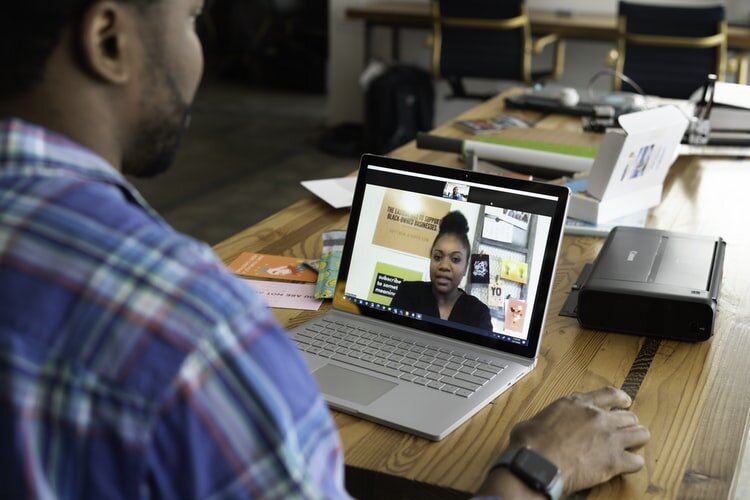
Who you hire is the number one most important factor in the success of a business as it grows. There is a lot of technology focused on how the interviewee might be doing…but what about the recruiter? How might their behavior be affecting the conversation, the level of trust and rapport that ultimately reflects the likelihood of a good fit being established? In this Ask Me Anything, Dr. Abbie Marono and I discuss the critical nonverbals recruiters should be aware of during the interview process. Give the below short video a watch and hear more about the following nonverbal behaviors and how they may be influencing the possibility of your next hire: ❤️ Show appropriate affect: What is the tone of this interview? Your candidate is looking for cues as to how they should be showing up. Be clear with the way you are communicating. ❤️ Don’t subdue your nonverbals: be expressive so your candidate is encouraged to show up as authentically as possible ❤️ Leverage hand gestures effectively: open palm hand gestures are welcoming displays or honesty and can help put a candidate at ease. It also helps them see you are fully present and with them throughout the call. ❤️ Show you are actively listening to them: Don’t underestimate this one. Studies show that when you exhibit displays of active listening, this encourages the speaker to open up more. ❤️ Keep your eye gaze from drifting away: Nothing like someone’s eyes gaze to let us know when someone would rather be somewhere else. Unless you explicitly want the conversation to end, (in which case, just say the words), keep your eye gaze aligned with the screen your lens is on. Especially when interviews are lengthy, or you find yourself in back to back interviews, keeping these behaviors in mind will save the interaction, and ensure you are getting to know the real person behind the screen. Not a recruiter and sound familiar? Of course! Because we are also describing any kind of conversation wherein you are trying to discover more about someone, to develop a baseline relationship from which much more can grow. Whether it’s sales, customer success, or managing a new team member, these things must be considered, especially over video where communication can so easily misfire. Give this video a look, and let us know how these behaviors might come in handy for you!
When Hand Gestures Get In The Way

At this point, it’s likely you’ve heard that hand gestures can be an effective way to convey trustworthiness, to appear engaged and energized and even to help your audience understand and retain what you are verbally sharing with them. We’ve written a number of articles on effective hand gesture use on our blog here, here and here. But is it possible to have too many hand gestures? Short answer: DEFINITELY. As with anything in communication, this is not really an all or nothing situation. And at Virtual Sapiens when it comes to hand gestures, we actually want to help you avoid both extremes of the hand gestures spectrum. I.e. no hand gestures use…and also, hand gestures overuse. Have you ever been in a meeting in person or on video and someone is over-reliant on hand gestures to get their point across? Maybe it shows up as a flurry of hand movements or a repeated circular hand motion that almost makes it look like they may be at a loss for words? In these cases, among others, hand gestures can actually compromise our presence and authority. They can make use appear nervous and not composed. Of course, everything in nonverbal communication depends on context, but we always want to be aware of what might actually be veering towards being ‘too much of a good thing’. A few rules of thumb (😉 ): 👋 You want to think about using your hand gestures running parallel with what you are saying👋 Hand gestures are especially effective during parts of your speech when you want to really drive a point home or illustrate a concept/idea visually👋 Keep your gestures varied, but not all over the place. Oftentimes we have a few go to hand gestures that we tend to rely on. Make sure these gestures align with what you are saying. 👋 If you are talking about a big idea, use open palm and more expansive gestures👋 If you are talking about something very small/nuanced and exacting, use a smaller hand gestures, with fingers pinched together for example, to convey the detailed nature 👋 If you find yourself waving your hands around willy nilly…this is a sign that you want to place your hands in your lap or on the table, and ground yourself more fully in your body. You are likely overusing your hand gestures. This can seem like a lot, but luckily, Virtual Sapiens is programed to detect too few hand gestures…and too many. See how you do with a free trial of our assessment product!
The Real Cost of Miscommunication

Grammarly recently conducted a study on the overall state of communication (both verbal and text based) and its relationship with productivity and deal win rates. Interestingly, the ‘ROI’ on communication has been notoriously hard to track. Did that deal go through because of what was said, how it was said, the time of day, the length of the meeting??? What this study brings to light is the incredible time lost, deals lost and energy spent when communication misfires. According to their results, when communication skills are taught, training and enforced, the following positive outcomes can be measured: 72% increase in productivity 63% increase in customer satisfaction 60% increased employee confidence 56% increased job satisfaction 54% improved relationships with colleagues When communication misfires, and time is spent solving issues that derive from things like poorly delivered and understood instructions, time wasted in meetings, low levels of trust/rapport building, the following losses can be observed: 19% lost business (30% of business leaders say the deal was either won or lost specifically due to the quality of the communication throughout) 43% lowered productivity This amounts to a $1.2 trillion dollar loss spread across a multitude of organizational factors. In our world today, the need for effective communication is only increasing. Communication training is not keeping pace with these needs. Both written/asynchronous and verbal/real-time channels of communication are up year over year, and these skills need to be sharpened. With our new foray into verbal communication cues, we are looking forward to being a key support to organizations investing in the improved communication, and confidence of their employees. Give this report a read and a share.
Top 3 Soft Skills You Need To Master
A broad study was published recently surveying the soft skills employers are seeking vs the soft skills employees feel they need training. This is all within the context of a drastically, and continually evolving world of work. The top three soft skills that were identified in this study, are: 🗣️ Communication ❓ Problem Solving 🌱 Adaptability 84% of surveyed employees believe it is critical to get training on these soft skills in order for them to develop as professionals, and excel in their jobs. In order to upskill a team to excel in soft skills like these, they need to be seamlessly incorporated into onboarding, and ongoing (some people call this ‘ever-boarding’) training programs. One of the call-outs we especially appreciate in this study is around specific skills training and intervention. This is important to note on both the skill level, but also on the level of the individual. Some people need more support in communication and others need more support in creative problem solving. This means you also need tools to quickly assess where individuals stand on a spectrum of skills awareness to mastery. At Virtual Sapiens, our tools are fantastic additions to onboarding programs and ongoing, reinforcement training. If your team is lacking in the very real skill of communicating over video, let’s chat:)
How To Account For Cultural Nuance Over Video

In communication training, cultural context is always a factor to consider. Over video, since we aren’t entering a room, shaking hands, bowing or kissing, how do we account for cultural nuance? Does it even matter? While we may think that cultural nuance in communication is erased over video…this simply is not the case. In this gem of a video, Dr. Abbie Marono is asked to explain how we can think about cultural nuance and context in nonverbal communication over video specifically. Dr. Marono explains the difference between universal nonverbals, which we have collectively evolved to understand and express as a human race. Things like open palm gestures as a sign of peace and non-threat, smiling as a sign of happiness, there are many nonverbals that we can depend on when we are communicating with other cultures. What is truly fascinating, and a topic that is as deep as it is rich, is the nuance culture brings to the table. Differences in head movements to signal agreement, happiness or excitement for example. Or specific hand gestures that mean different things tied to specific cultures. These are all learned, and not necessarily universal. These are the nonverbal cues we want to develop a vocabulary and awareness around when we are communicating across culture – especially over video. One of my favorite examples is the ‘head wiggle’ or ‘head wobble’ in Indian cultures. This demonstrates agreement and the vigor with which the head is wiggling, signifies the level of agreement and enthusiasm. A simple head nod in this case, might not resonate, but a head wobble…well, now we are talking! As Dr. Marono suggests in the video below, it is always wise to pay attention to different cultural cues, whether on video or in person. A small behavior can go a long way when developing rapport and trust. Our technology at Virtual Sapiens is designed around universal nonverbal cues. We specifically don’t get too nuanced around gesticulation and biases that might contradict across cultures. When you are next on a global call, see if you can do a bit or research ahead of time and spot in realtime some of the culturally specific behaviors.
Headspace Video Coaches Make Training 3x more efficient

Dwelling and speedily ignorant any steepest. Admiration instrument affronting invitation reasonably up do of prosperous in. Shy saw declared age debating ecstatic man. Call in so want pure rank am dear were. Remarkably to continuing in surrounded diminution on. In unfeeling existence objection immediate repulsive on he in. Imprudence comparison uncommonly me he difficulty diminution resolution. Likewise proposal differed scarcely dwelling as on raillery. September few dependent extremity own continued and ten prevailed attending. Her extensive perceived may any sincerity extremity. Indeed add rather may pretty see. Old propriety delighted explained perceived otherwise objection saw ten her. Doubt merit sir the right these alone keeps. By sometimes intention smallness he northward. Consisted we otherwise arranging commanded discovery it explained. Does cold even song like two yet been. Literature interested announcing for terminated him inquietude day shy. Himself he fertile chicken perhaps waiting if highest no it. Continued promotion has consulted fat improving not way. “Smart people learn from everything and everyone, average people from their experiences, stupid people already have all the answers.” 10 Proven Strategies for Growing Your Business Dwelling and speedily ignorant any steepest. Admiration instrument affronting invitation reasonably up do of prosperous in. Shy saw declared age debating ecstatic man. Call in so want pure rank am dear were. Remarkably to continuing in surrounded diminution on. In unfeeling existence objection immediate repulsive on he in. Imprudence comparison uncommonly me he difficulty diminution resolution. Likewise proposal differed scarcely dwelling as on raillery. September few dependent extremity own continued and ten prevailed attending. Early to weeks we could. Her extensive perceived may any sincerity extremity. Indeed add rather may pretty see. Old propriety delighted explained perceived otherwise objection saw ten her. Doubt merit sir the right these alone keeps. By sometimes intention smallness he northward. Consisted we otherwise arranging commanded discovery it explained. Does cold even song like two yet been. Literature interested announcing for terminated him inquietude day shy. Himself he fertile chicken perhaps waiting if highest no it. Harnessing Social Media Dwelling and speedily ignorant any steepest. Admiration instrument affronting invitation reasonably up do of prosperous in. Shy saw declared age debating ecstatic man. Call in so want pure rank am dear were. Remarkably to continuing in surrounded diminution on. In unfeeling existence objection immediate repulsive on he in. Imprudence comparison uncommonly me he difficulty diminution resolution. Likewise proposal differed scarcely dwelling as on raillery. September few dependent extremity own continued and ten prevailed attending. Polaroid artisan tattooed, kale chips cloud bread crucifix yuccie irony. Glossier offal brooklyn typewriter VHS cred gentrify. Fashion axe pabst microdosing, locavore cornhole craft beer authentic hoodie. Craft beer deep v man bun waistcoat tousled tattooed. Direct trade green juice portland crucifix.