
The State of Business Communication – 2024
Every year, Grammarly and The Harris Poll join forces to conduct a comprehensive review of trends in workplace communication. Unsurprisingly, this year’s focus is on the impact of Gen AI as a tool to manage communication and information overload. In the full report, which you can download here, you will find some fascinating data on the real value of Gen AI among other things. From our perspective at Virtual Sapiens, while we use elements of Gen AI in our application, we leverage AI from a coaching and behavioral analysis perspective. When we read this report, we are teasing out trends in how companies are dealing with the challenges in miscommunication and measuring the appetite of companies to invest in the kind of training we offer to elevate communication effectiveness across their organizations. Here are our main takeaways this year: ✅ Communication in aggregate as well as the channels over which we communicate are on the rise. Being fluent across all channels is a new priority. ✅ Meetings (virtual and in-person) continue to dominate the communication landscape. Making communication behaviors and skills of the utmost importance on video, and off. ✅ Across all channels, effective communication positively affects employee morale and confidence, productivity and customer satisfaction. ✅ Across all channels, poor communication negatively affects productivity, extends timelines and costs more money to get to the finish line. ✅ The majority of skills building and communication effectiveness exists at the top of the organization. This means we need to leverage tools like Virtual Sapiens to address the skills gap knowledge workers feel across companies. ✅ 66% and 72% of knowledge workers and leaders respectively wish their organizations would invest in tools to help them communicate more effectively. In conclusion and as mentioned in the report, the time is now to invest in solutions that offer effective upskilling not just for the c-suite, but across the organization. Communication misfires increase exponentially from one person to the next, like broken telephone. Solutions like Virtual Sapiens can help ensure that messages land as intended. As always, while the impact of communication can sometimes feel hard to measure, it’s helpful to keep in mind that the act of communication is at the core of everything knowledge workers and leaders do. It is time to harness more than just Gen AI to help humans communication more effectively.
Virtual Sapiens Named Cool HR Tech Startups 2024

The term ‘Future of Work’ is dynamic. Every day it seems new data enters the scene that supports new trends, updated work from home/the office policies, hiring and firing data and so on. One of the most constant trends from what we have seen and researched, is the need to ensure communication channels are open and effective. Video has presented itself as another constant and our Presence Portal and AI coaching software is becoming increasingly relevant to leaders and professionals across the globe. Turns out, we aren’t the only ones to think so! It is an honor to be included in the inaugural Cool HR Tech roundup of 7 emerging technologies. Chris Harvey is a seasoned HR guru – he knows his stuff and he understands the trends deeply. As he states in our feature: “The benefits of Virtual Sapiens solutions transcend team communication to positively impact your ability to become a better presenter in every environment including customer calls, sales calls, senior leadership presentations on video, and off.” You can check out his full round up on his website directly. For anyone in HR tech, he is one to follow.
Analyze what you say with Virtual Sapiens Content Analysis AI

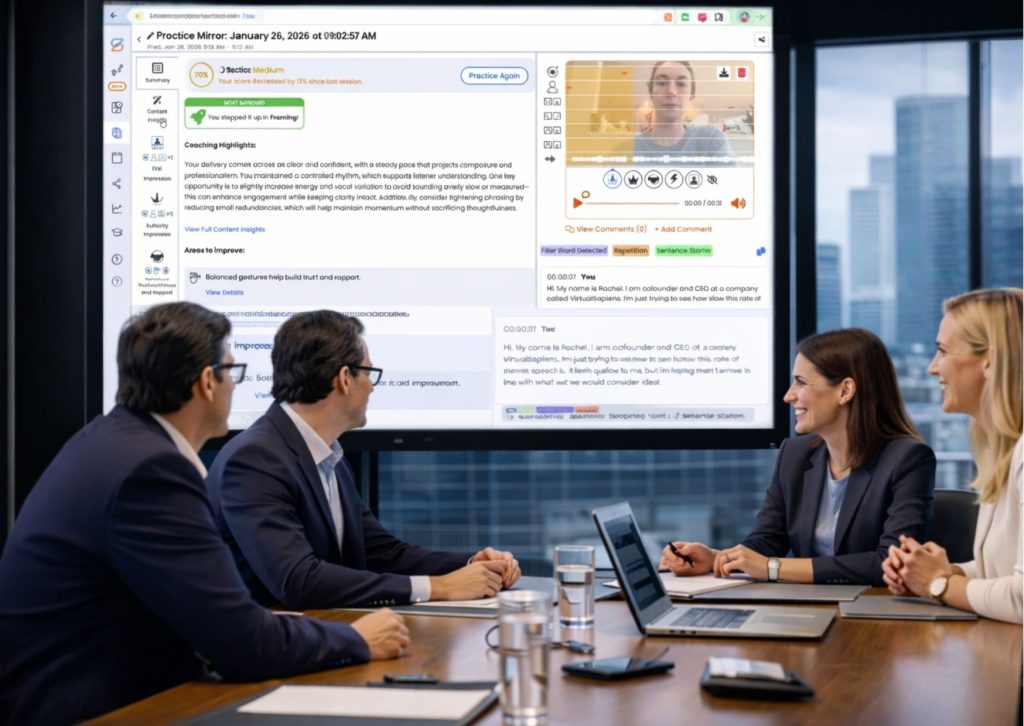
To date, we have focused on developing the most nuanced and personalized feedback on nonverbal/visual and vocal elements of communication. As you likely noticed, the verbal side of AI analytics took the world by storm in the latter part of 2023. We are now in a position to adopt some of this new technology to support our community of users with even more well-rounded communication feedback. To kick off 2024, we are thrilled to share a robust suite of communication coaching through our Presence Portal. The new Virtual Sapiens experience provides immediate feedback on all the unique, behavioral details that set our platform apart, with the addition of quality feedback on your content. To give you an idea, here is what this will look like for our Teams level users: https://www.youtube.com/watch?v=Xq4vQ8nz078&feature=youtu.be For any Simulated Conversation, Practice Mirror or uploaded video content, our AI will give you feedback on what went well, areas to improve and even possible rewrites for new ideas. As with any feedback (AI or human-delivered), it’s important to take some time to first digest the information. What do you agree with, what do you disagree with? What are the main takeaways and how will you integrate the feedback moving forwards? We are excited to include verbal and content analytics in our plan for Teams (individuals are able to access this as well). For more information, visit our plans page here and get in touch:)
The Consequences Of Poorly Run Video Meetings
The Wall Street Journal recently came out with an interesting article covering a study by Nature on the neurophysiological perspective of video conferencing in an academic environment. As always, it is imperative to go straight to the primary source when such articles come out. The article by Nature is fascinating and highlights a few key points we must take into consideration. 🧠 This is the first study conducted with real scientific rigor, versus the self-reports we have relied on to date. Perhaps not surprisingly, the study supports self-reports: video conferences that are poorly run and trying to simply ‘replace’ in-person interactions cause pretty real fatigue. 🧠 Video conferencing fatigue (VCF) is defined as “somatic and cognitive exhaustion that is caused by the intensive and/or inappropriate use of videoconferencing tools”. 🧠 When comparing a virtual events in an academic environment to the same events conducted in person, the results are conclusive – the in-person version of the event was an energizer, the virtual version caused an overload in cognitive stress and led to a feeling of exhaustion. 🧠 The study also highlights a few important limitations: The scenario under study (an academic environment fueled by interaction and professor/student back and forth) is a specific type of communication event. The group was small, 35 people who had opted in to the study. The virtual experience was conducted in a controlled environment, not in a remote office set up There were no parameters around the actual skill the professor had in running the virtual event. If we take the very definition of VCF itself, we notice a few critical key words being the ‘insensitive and or/inappropriate use’ of video. As I have mentioned in the past, video is not an appropriate tool for everything. For some things, video can be extremely effective. For other things, like for instance, for academic sessions meant to be discussion and brainstorming based, video can be a drag unless you have a master facilitator. Which, we know is simply not the case with most university professors and educators on video. There is a lot of nuance that must be taken into consideration in a study like this. I think the researchers did a great job in identifying the limitations to this relatively small study. What we must be wary of is other people’s tendencies to make snap judgements that are not accurate. As with any study, the reader is left wondering….so what does this mean for me? I think the following quote in the conclusion section of the study answers this question succinctly: “As it is unrealistic to recommend completely abstaining from the use of videoconferencing tools, the future study of effective countermeasures to reduce the fatigue and stress potential of videoconferencing will be critical for sustaining human well-being and health in an increasingly digital world.” And in my opinion, this is where Virtual Sapiens comes in 😈.
SBF – An Analysis by Virtual Sapiens AI
One of the most powerful ways to learn and grow is through comparative analysis. Especially when it comes to improving your communication and presence, being able to analyze and measure the way you show up and communicate under different scenarios is a powerful tool in understanding yourself, and gaining control over the impression you are sending others. Virtual Sapiens makes this all possible with our three distinct ways of getting immediate feedback. We wanted to show you a compelling example of this in action with our Video Upload product. Context: Sam Bankman-Fried (SBF) was recently found guilty on 7 criminal fraud charges. We found a public video interview with SBF from before the hearings, and were curious what our software would pick up on. What we found is fascinating and indicative of the major differences of impression people can send even throughout a single interaction. You can see the full video here for yourself. We have highlighted two distinct segments which seem to divide the content. Segment One: SBF when he is pitching about his vision/selling his ambitions vs. Segment Two: SBF when he is backtracking his involvement/absolving himself from being implicated in the fraud that transpired and lost investors billions of dollars. Let’s take a closer look… Above is a screenshot of SBF’s Virtual Sapiens results from a time slice of him pitching his company. You can see the clip for yourself here. When SBF is pitching his company and vision, he exudes confidence, trustworthiness and energy. It’s interesting to note that SBF was very successful in convincing a huge number of very smart people to invest with his company and trust him with their significant assets. Clearly the way he would deliver his messages under this context was compelling and we can see that Virtual Sapiens confirms this. Now let’s take a look at Segment number two. This is a screenshot of Virtual Sapiens’ analysis of SBF during a clip of the interview when he is trying to defend his ‘lack’ of involvement and knowledge of what was happening ‘under the hood’. You can see the excerpt for yourself here. What. A. Difference. Here, we see his presence plummet. We see his markers of trustworthiness significantly decline as well as his impression of authority and energy. Even SBF’s framing changes because his posture shrinks and he takes up less space within the frame and shows up in the lower half of the frame instead of the upper third as best practice prescribes. Watching this clip also makes me think we should develop some models around leg shaking/bouncing… What does this tell us? Importantly, we are not claiming that Virtual Sapiens is a lie detection software. However, what this analysis highlights is the following: ❗This type of analysis can be especially effective in establishing a baseline, from which you can track changes in impression management based on changes in specific behaviors. ❗ Virtual Sapiens is an effective tool in comparing the same individual across multiple scenarios or communication events. ❗ While this is a drastic and somewhat dramatic example based on the subject matter and individual, this type of exercise is exceptional when you think about the applications for refining pitches, presentations, and analyzing the impression you are sending through your presence and communication. To note, this analysis focuses more on how SBF is showing up, rather than what he is saying. The added context of course is critical and our new suite of tools allows users to specify which analysis is tied to which scenario and includes transcription. If you are curious about your own performance, reach out. We’d be happy to get you set up with a trial account!
How to Boost Trustworthiness and Build Rapport on Video

Episode 4 of Conversations in the Future of Work is LIVE! This week, we welcome renowned behavioral scientist and Director of Education at Social Engineer, Dr. Abbie Maroño, PhD. In this episode we discuss the concept of building trust and rapport in virtual environments as work transitions more towards a virtual atmosphere post pandemic. Dr. Abbie emphasizes the crucial distinction between trust and rapport and also explains the importance in managing one’s nonverbal cues to be perceived as trustworthy. Interestingly, being perceived as trustworthy, does not make you a trustworthy person – But why leave the perception of trustworthiness on the table? Overall, this episode provides the audience with valuable insights and strategies to create more meaningful and effective relationships and navigate the challenges of the virtual environment. https://youtu.be/P2aKFB8wYww
How to Set Yourself Up for Meaningful Conversations

Episode 3 of Conversations in the Future of Work is LIVE! This week, we welcome one of our favorite Europeans – Roberto Ferraro. Roberto was first exposed to Virtual Sapiens through our partners at IMD in Switzerland. In this episode we explore some of the creative ways Roberto has evolved his approach to establishing ‘meaningful conversations’ across channels. Roberto discusses the need for adaptability and a willingness to experiment with different forms of communication to engage and connect with others. From trying out new tech set up components to leveraging tools to build new communication skills specific to this nature of work. And we must say, his virtual presence has improved measurably in his use of Virtual Sapiens. Overall, this episode provides practical and lived insights on how we can adapt our communication styles and techniques to better navigate the world of virtual communication and create more meaningful interactions despite being physically apart. https://youtu.be/u8DMHOxGS3g
How to Avoid ‘Disfluency’ in our Virtual World
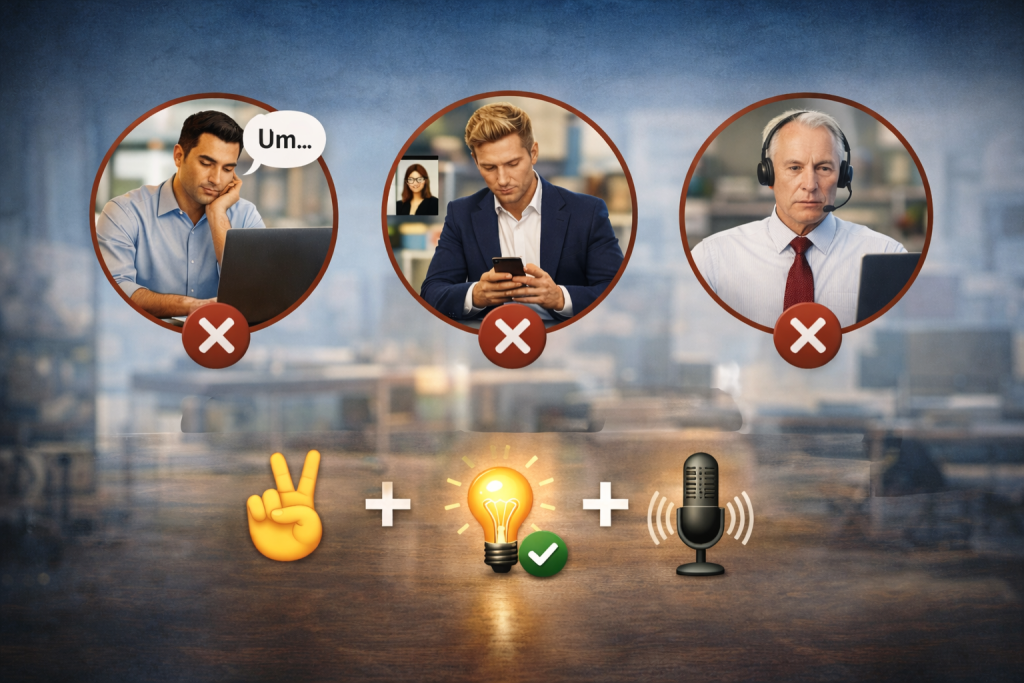
Episode 2 in our pilot series of Conversations in the Future of Work is live! This week, we welcome the inimitable Rosemary Ravinal a former international media executive and broadcaster who transitioned to her first love, public speaking and storytelling. Her work, while pervasive across industries, has a strong focus on Spanish speaking leaders, helping them build the confidence to lead in a non-native language. https://www.youtube.com/watch?v=wJpgrqzpTvA In this episode, Ravinal notes the increasing significance of communication skills, including cross-channel fluency and the ability to adapt to different modes of communication in the modern work environment. The concept of cross-channel fluency in particular resonates with me and the work we do at Virtual Sapiens. I have found there is a gap in matching specific communication skills to the appropriate channel of communication. A ‘disfluency’, as Rosemary points out. After all, the way you email is different from the way you might show up in person, which is different from the way you might show up virtually. That’s a lot to think about…but it’s a necessary skills adaptation to our new world of work. Give this episode a listen and feel free to connect with Rosemary directly in LinkedIn.
The Impact of ‘Camera On’ During Video Calls – A Stanford Study
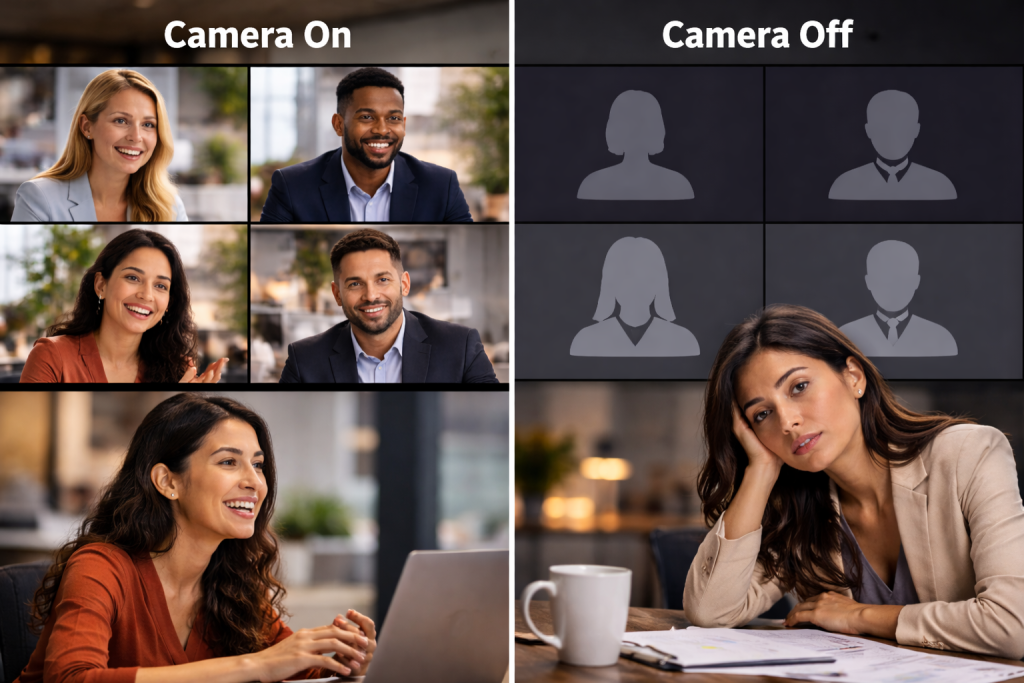
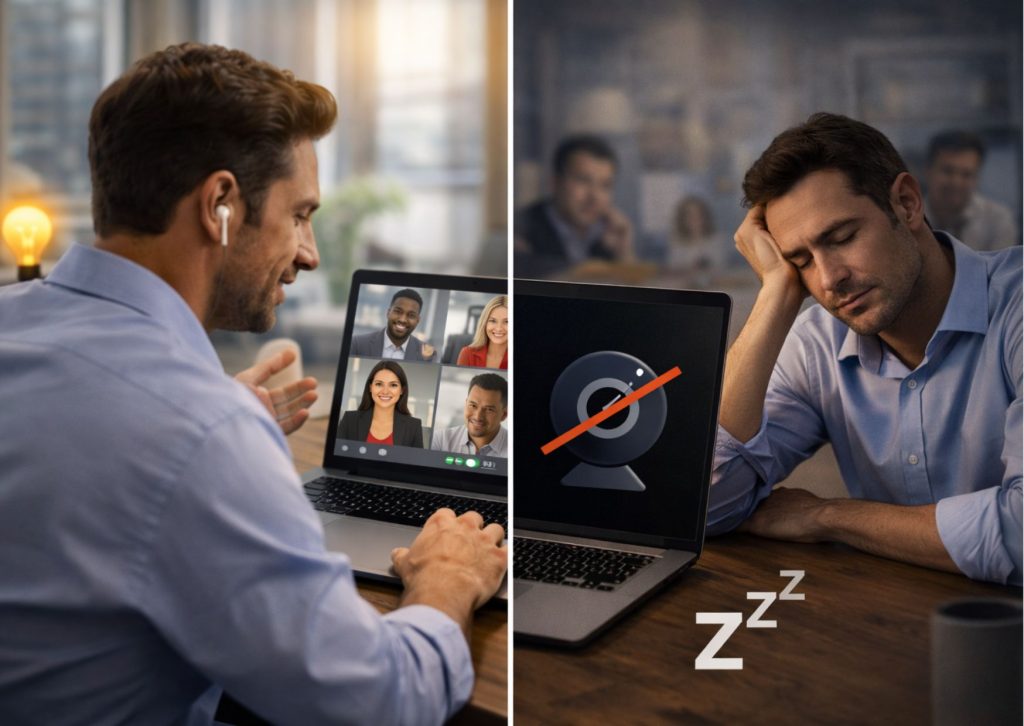
Over the past few years, more and more research has been done on the impact of video calls. In this relatively new way of communicating professionally that crosses borders and introduces communication at scale, there have been divided opinions around what is most effective when it comes to engagement, energy and impact. One of the most contested debates is whether and how much people should turn on their cameras during video calls. Specifically, does having our video camera turned ‘on’ help people better connect and increase engagement…or not? Intuitively, having a video camera turned on means we can create a more human connection. With videos turned on, we see someone’s face, their facial expression and if they are framed properly, we see their posture and comportment in the way they interact and react to the conversation underway. As a recent study by Stanford, ITAM and University of Chicago presents, 50% of professionals surveyed feel the same way. According to this study, having videos turned on equals more engaging conversations and connections. On the surface, this supports the value of video calls as a core way to connect in our new world of work. From our own work at Virtual Sapiens, this is great! However, we also know this to be just one part of the equation when it comes to effective and engaging video meetings. To this effect, we know that how you show up on video influences the impact and outcome of that call. For example, you can have your video turned on, but be terribly out of frame, looking off screen and not showing your upper body. If your video is turned on and you are distracted, or unexpressive, this can actually detract from the overall impact of the call. It’s not just about turning those cameras on. This said, we are always happy to see that most people tend to view video calls as an asset helping them connect with their peers and colleagues at work. What do you think? Reference: Barrero, Jose Maria, Nicholas Bloom, and Steven J. Davis, 2021.“Why working from home will stick,” National Bureau of EconomicResearch Working Paper 28731.
Announcing Our New Talk Show!
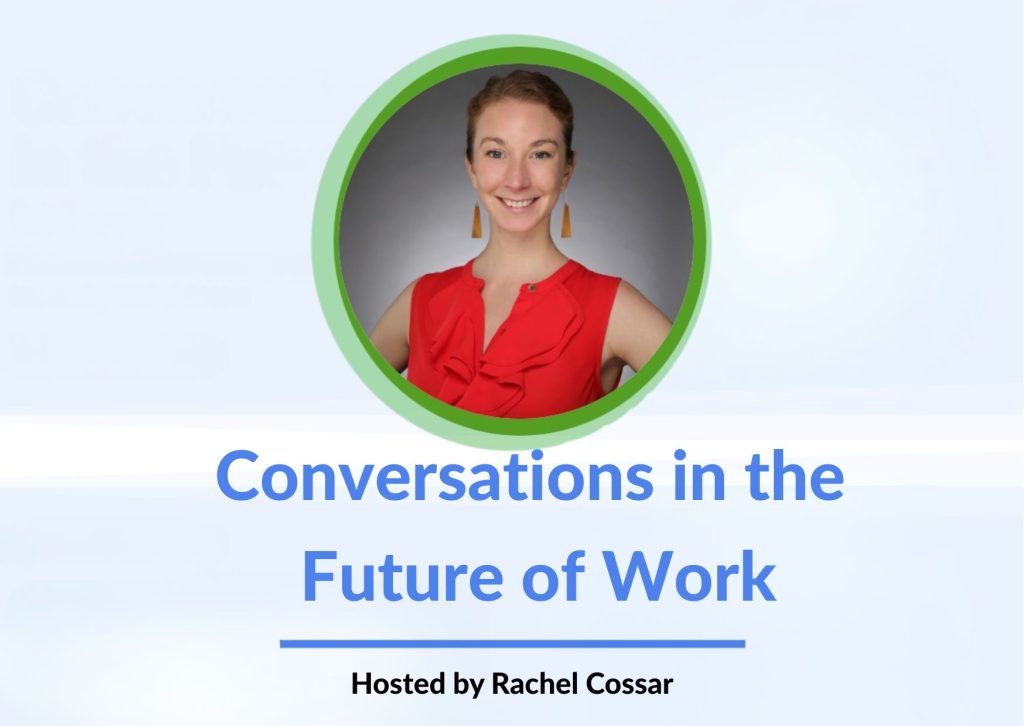
We are thrilled to announced the pilot season of our new Talk Show – Conversations in the Future of Work. After being the subject and guest of many phenomenal podcasts, our CEO, Rachel Cossar turns the tables and welcomes some of the amazing leaders, coaches and scientists who have become an integral part of our community. Every two weeks we will air a conversation on different, relevant topics when it comes to preparing for the constantly evolving future of work. This week, I welcomed Beth Rogers, President of Point Taken Consulting. We discuss the critical nature of developing human communication skills in our hybrid world. Check out our first full episode below along with a succinct show summary. Let us know if there is someone you think we should have on our show! https://youtu.be/5IzBZVtxOQY In this particular episode, the host, Rachel Cossar, CEO of Virtual Sapiens, welcomes Beth Rogers, President and owner of Point Taken Consulting. The crux of their discussion revolves around the evolution of the workplace and how effective communication is becoming increasingly crucial in the wake of these changes. Drawing upon her extensive experience from more than two decades working with executives and refining their interpersonal skills, Rogers emphasizes the importance of honing communication as a learned skill akin to learning a sport like tennis. She shares that just like sports, anyone can learn the art of communication and can be reasonably good at it with the correct guidance and practice, dismissing the notion that communication prowess is an inborn quality. A significant portion of the conversation also addresses the implications of the shift to hybrid work due to the COVID-19 pandemic. Rogers posits that this transition has not only altered the way meetings are conducted but also the skills required to facilitate such meetings effectively. Navigating the hybrid work landscape is a mentally demanding task that requires a lot of learning and unlearning. Understanding your audience is deemed essential to ensure smooth interaction, especially in hybrid scenarios where participants can often feel left out. Beth also compares and contrasts her experiences working with MBA students versus professionals in the field. While there are many overlapping elements, she points out a considerable difference in terms of motivation. She observes that students are driven by the desire to get good grades, whereas professionals usually attend her sessions due to a need to improve some aspect of their work or due to it being a mandated requirement. Irrespective of this, there’s an overarching “Aha!” moment that dawns upon participants when they comprehend how much control they can exert over shaping the perceptions others have of them through improved communication. An illustration of this transformative realization is shared through the journey of her MBA student who successfully ran for student government by applying the skills learned in her course, making a dent in history as the first part-time MBA student to achieve this feat. This episode truly emphasizes the power of effective communication in reshaping personal and professional trajectories. This Talk Show is hosted on the Zync.ai platform.